Learning
Primary school is a pivotal time for children as they lay the foundation for their lifelong learning journey. By providing hands-on, interactive experiences, we enable our students to develop critical thinking skills and a sense of independence. In the Primary Years, we transition students from concrete sensory play to structured, inquiry-driven learning, enabling children to connect academic subjects such as reading, writing, and mathematics with the real world, making learning relevant and meaningful.
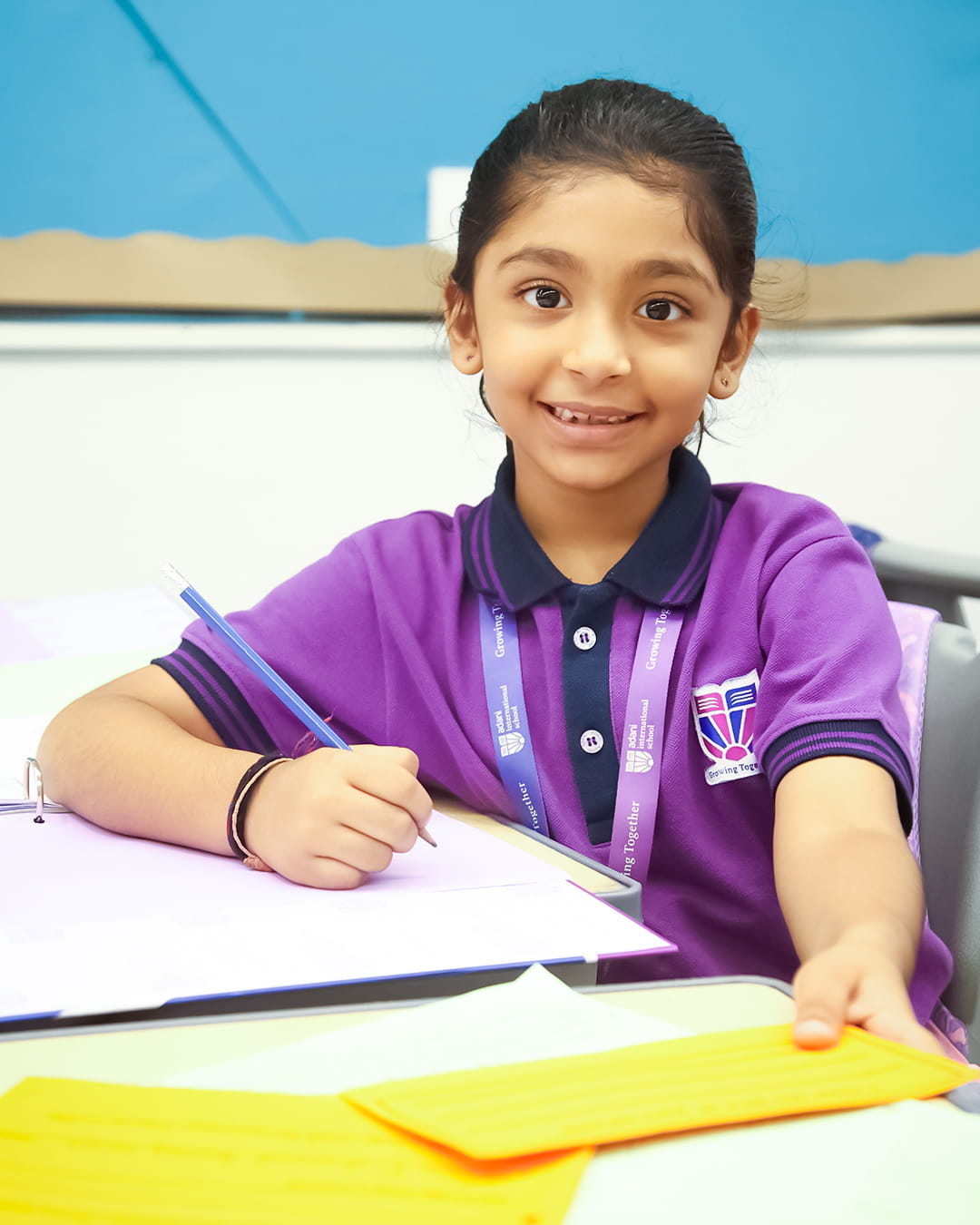
Our Primary Years pedagogy offers an inquiry-based, transdisciplinary curriculum framework that builds conceptual understanding. It is a student-centred approach that reflects the best educational research, thought leadership and experience. Activity-based mathematical problem solving using hands-on manipulatives, science explorations, plant cultivation projects, and nature walks keep learning relevant, engaging, and connected to the real world.
The curriculum prioritises people and their relationships to build a strong learning community. During Scientific Inquiry sessions, students learn to observe, hypothesise, collect data, and draw conclusions through exciting, child-friendly experiments.
The Primary Years curriculum is rooted in the spirit of inquiry. Weaving scientific inquiry into the curriculum at the elementary stage is crucial. As a child grows, the capacity for perception and investigation also grows. In dedicated scientific inquiry sessions, students hone their scientific skills such as generating hypotheses, predicting results, observing, gathering relevant data, and reaching a conclusion. The objective of inculcating these skills is to enable students to use the tools and techniques for a better future. We aim to create a holistic environment where science is appreciated by all students.
Inquiry-based learning helps students comprehend the concepts they are learning and their application to real-world situations. Through self-directed inquiries, students have the opportunity to uncover knowledge through exploration, hands-on experiences, and discussions, leading to a deeper understanding and personal connection to the material.
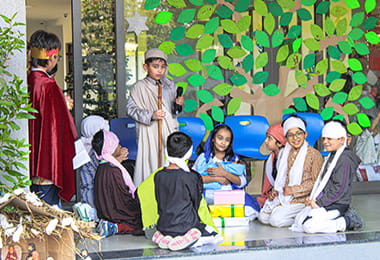
Weekly public speaking sessions, reading circles, and theatre dramatizations build confidence and expressive fluency. Through these conversations, children learn critical speaking and listening behaviours, deepen their understanding of literature, and recognise reading as fun.
Our children use critical thinking skills as they reflect on the characters, events, literary devices, and personal connections to the story. Responding to the text through structured discussions helps students gain more thoughtful insight into the story.
Our curriculum framework begins with the premise that students are agents of their own learning and partners in the learning process. It prioritises people and their relationships to build a strong learning community.
Students use their initiative to take responsibility and ownership of their learning. By learning through inquiry and reflecting on their own learning, students develop knowledge, conceptual understandings, skills, and the confidence to make a difference in their own lives, their communities, and beyond.
Learners know how to take ownership of their learning, collaborating with teachers to deepen understanding and increase their confidence and self-motivation. Through actively engaging in integrated ongoing assessment, they become effective, self-regulated learners who can act on constructive feedback.
EnglishMathematicsEnvironmental StudiesGujaratiArtDance & Drama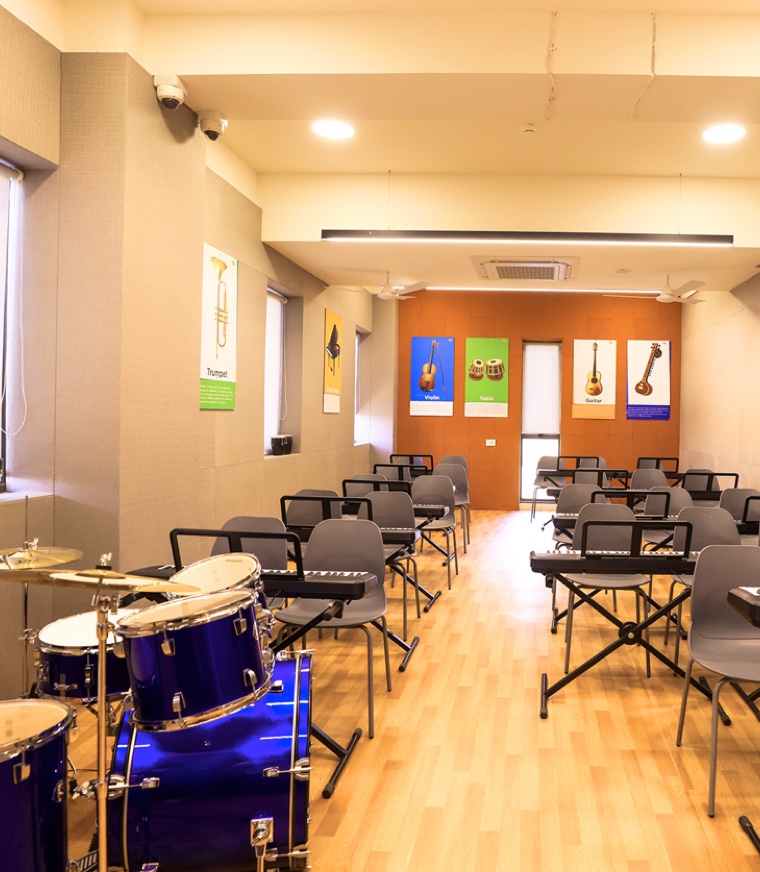 Music
Music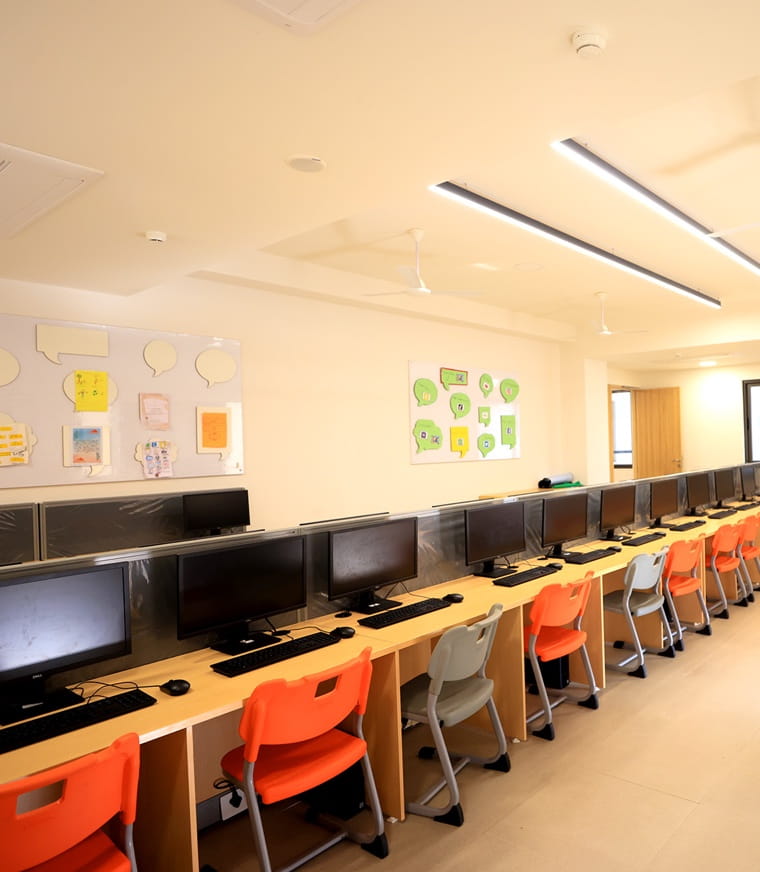 ICT Coding
 Sports & Fitness
A wide range of co-curricular activities is administered at Atmiya Green School to ensure a well-rounded education for all students. This includes exposure to academic and extracurricular activities appropriate to the levels of student capacity, class and age.
Academic activities include Science & Math Exhibition, Competitions, Recitation, Field and Factory Visits, and Olympiads. Extra-Curricular activities include Sports, Field Trips, Study Excursions, Camping Tours, Public Speaking, etc.
These activities are key to developing student skills, capacity, learning, and experience, helping them grow and evolve into well-rounded humans.
Exhibition- Science, MathsRecitationField and Factory VisitsOlympiadsSportsStudy ExcursionsCamping ToursPublic Speaking